March 27, 2026
What is Promptfoo? A Practical Guide to Testing and Evaluating AI Prompts
Learn how to test, evaluate, and improve your AI prompts using Promptfoo
What is Promptfoo?
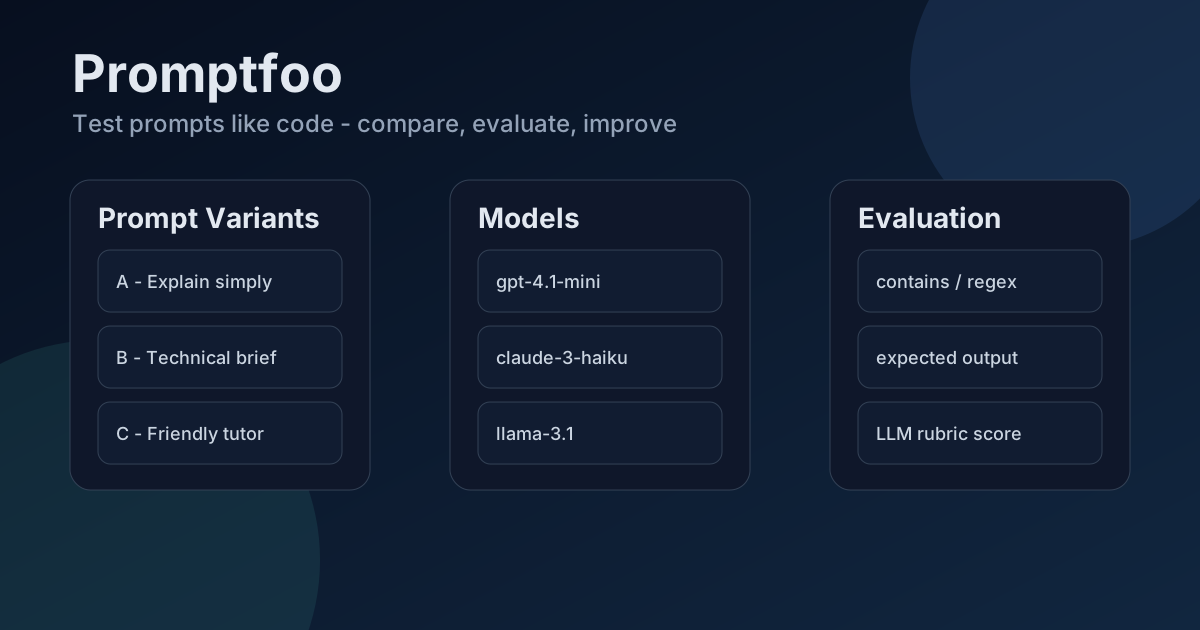
Promptfoo is an open-source framework for evaluating and testing LLM applications, especially prompts, so you can compare outputs, catch regressions, and improve quality in a repeatable way
With Promptfoo you can:
- run multiple prompt variants against the same inputs
- compare outputs across models side by side
- score responses automatically with deterministic checks and model-graded rubrics
- speed up evaluation with caching and concurrency
- use it from CLI and in CI/CD workflows
Think of it as unit testing for prompts, with assertions that can be both rule-based and LLM-assisted
Why Prompt Testing Matters
Even a small prompt change or model upgrade can change outputs in ways that are hard to predict by intuition
Without testing:
- regressions can slip in unnoticed
- behavior becomes inconsistent across prompts, inputs, and models
- quality is difficult to measure objectively
With Promptfoo:
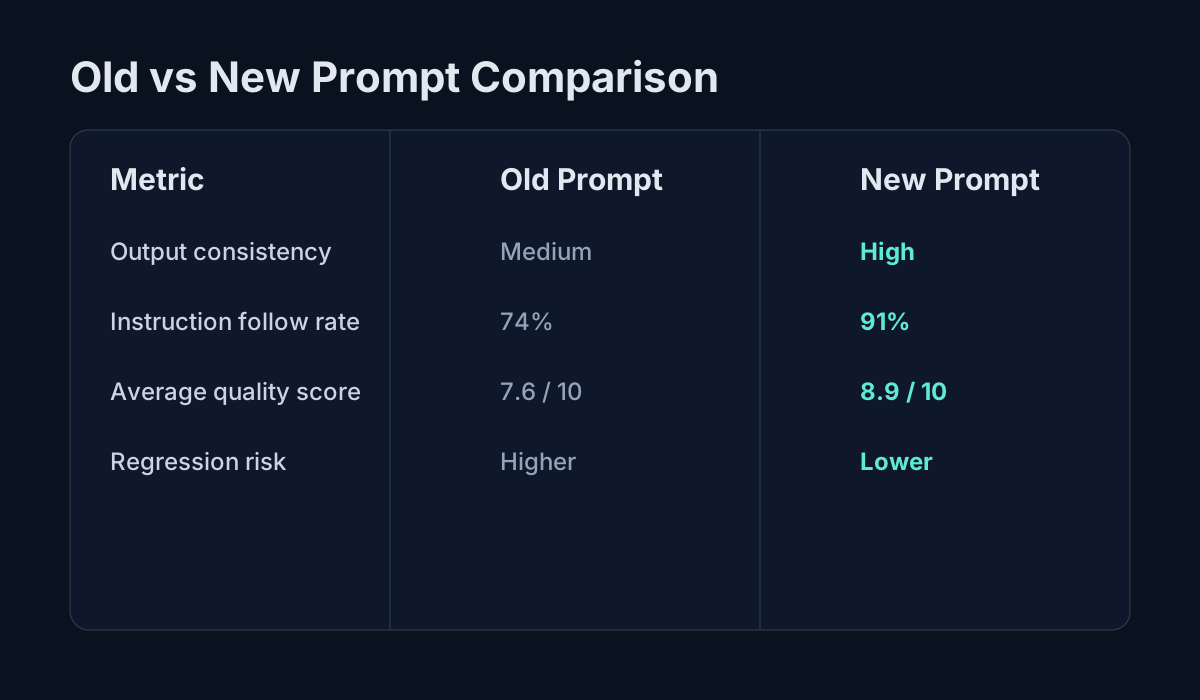
- experiments are repeatable
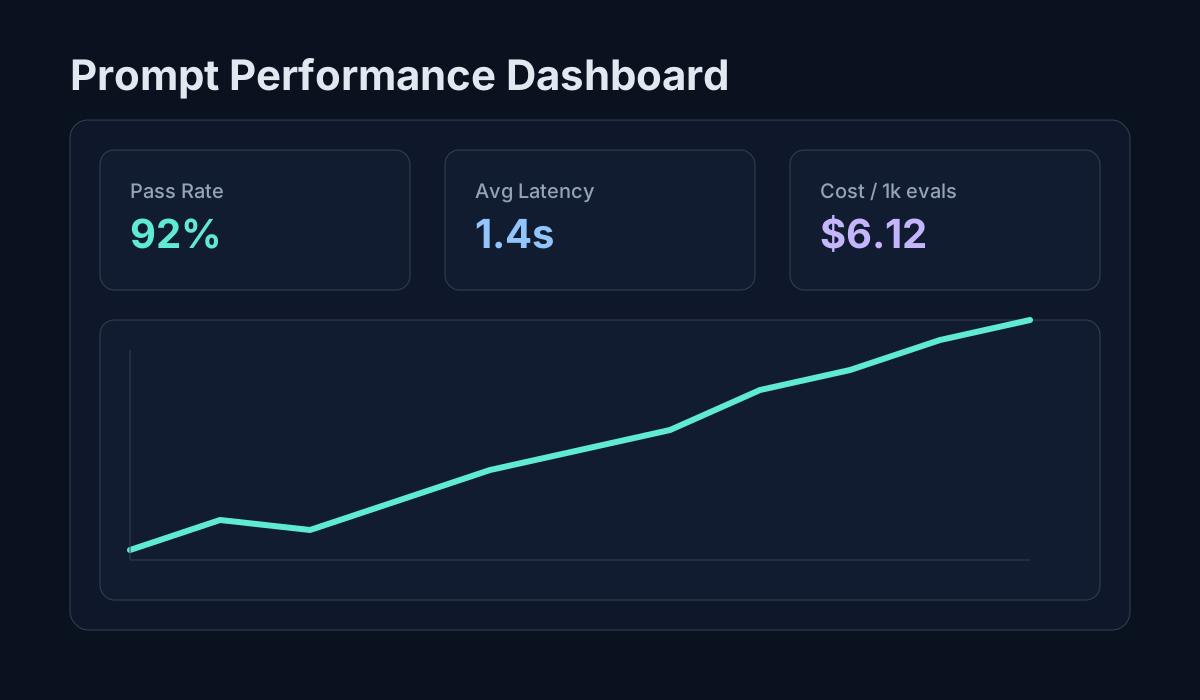
- quality is measurable
- prompt changes are safer to ship
How Promptfoo Works
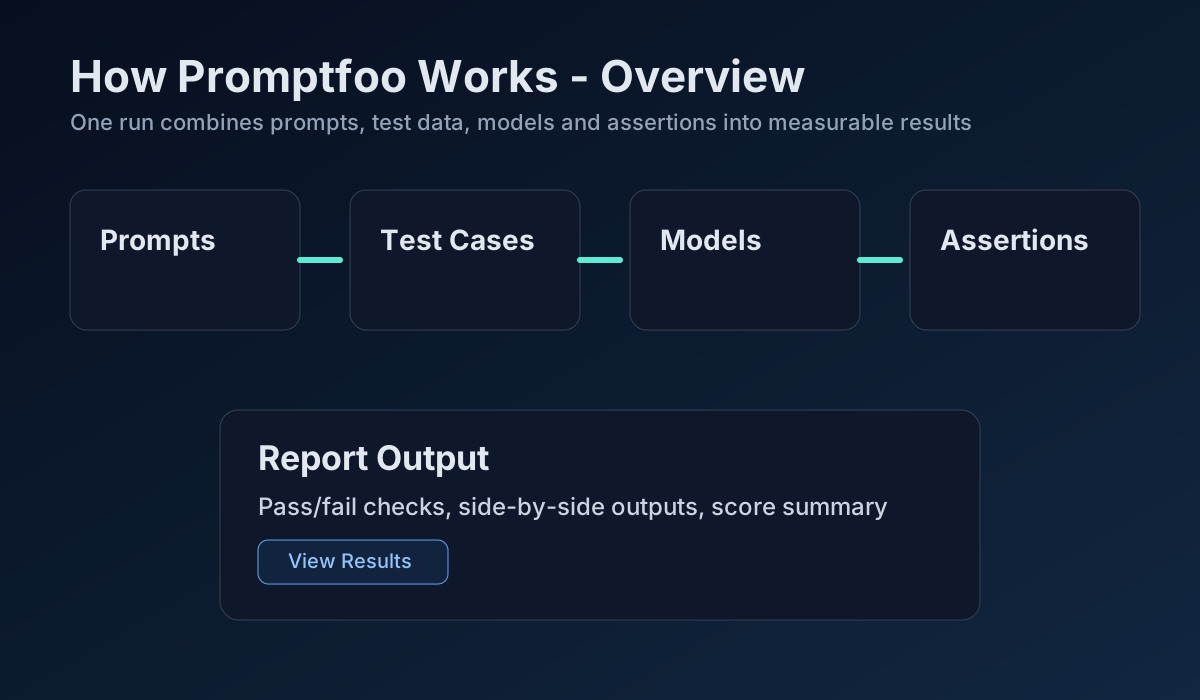
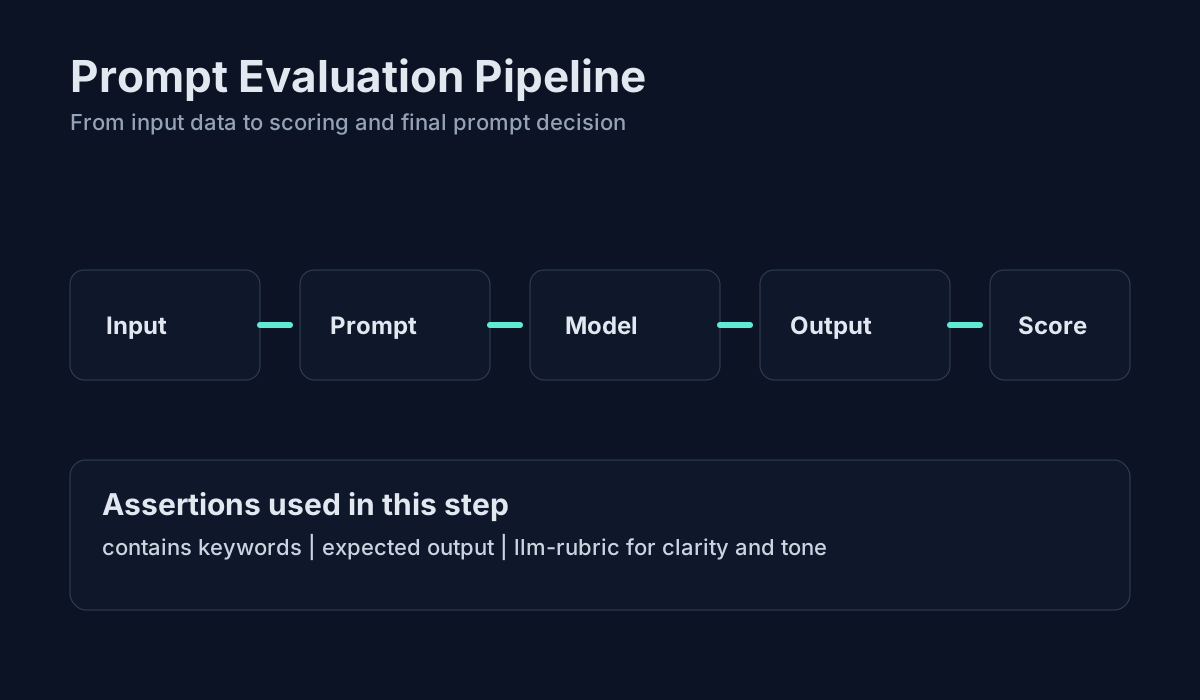
Promptfoo evaluations usually rely on three building blocks: prompts, test cases, and assertions or metrics
1. Prompts
Prompt A: Explain this like I'm five
Prompt B: Provide a concise technical explanation
2. Test Cases
Input: "What is blockchain?"
Input: "Explain photosynthesis"
3. Assertions and metrics
Examples include:
- deterministic checks such as
containsandequals - weighted scoring and thresholds
- model-graded evaluation with
llm-rubric
Installation
A fast way to start is an example template:
npx promptfoo@latest init --example getting-startedYou can also install globally:
npm install -g promptfooOr use Homebrew:
brew install promptfooMost providers require credentials. For OpenAI:
export OPENAI_API_KEY=sk-...Basic Configuration
A typical setup lives in promptfooconfig.yaml:
prompts:
  - "Explain {{topic}} in simple terms."
  - "Provide a concise technical explanation of {{topic}}."

providers:
  - openai:gpt-4.1-mini

tests:
  - vars:
      topic: "quantum computing"
    assert:
      - type: contains
        value: "quantum"
      - type: llm-rubric
        value: "Is the explanation accurate and appropriate for the requested style?"
        provider: openai:gpt-4.1-mini
        threshold: 0.7

  - vars:
      topic: "machine learning"
    assert:
      - type: llm-rubric
        value: "Does the answer avoid hallucinations and keep a clear structure?"
        provider: openai:gpt-4.1-mini
You can also load tests from YAML, JSON, JSONL, CSV, TypeScript, JavaScript, and external datasets such as Google Sheets
Viewing Results
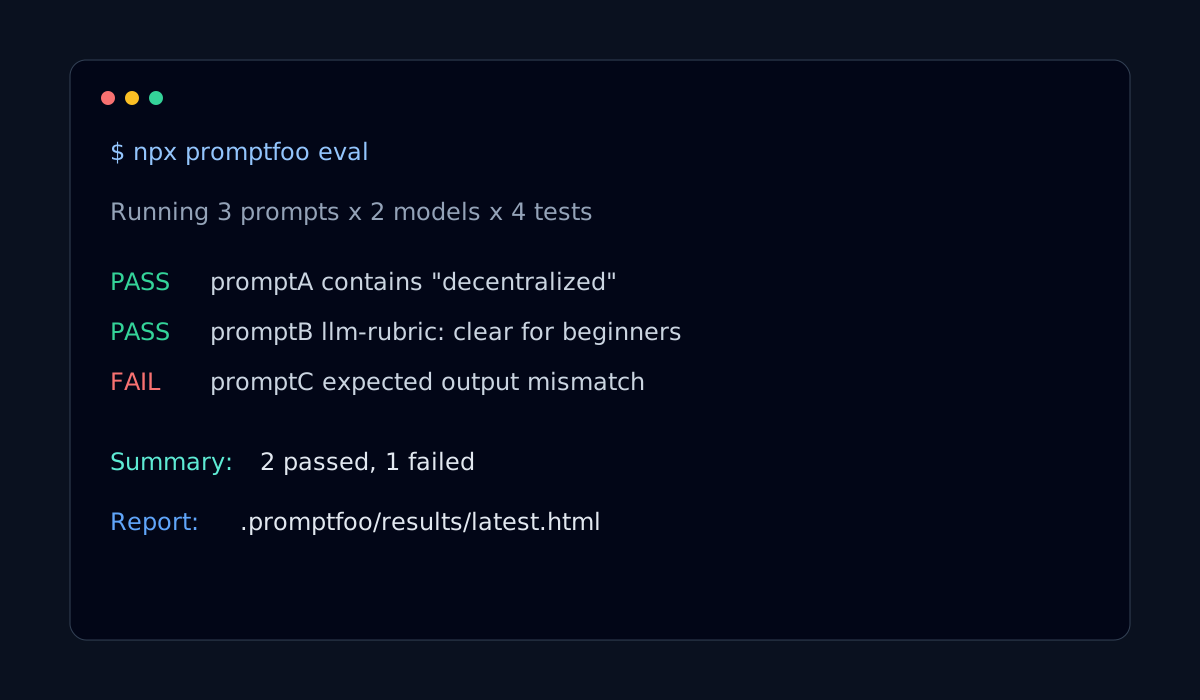
After an evaluation, open interactive browser results:
npx promptfoo@latest viewIf you prefer guided setup:
npx promptfoo@latest eval setupUseful additions in practice:
- validate configuration with
promptfoo validate - treat custom assertions and plugins like local Node.js code with full local permissions
Conclusion
Prompt engineering without testing is mostly guesswork
Promptfoo turns it into a structured, repeatable, and measurable process